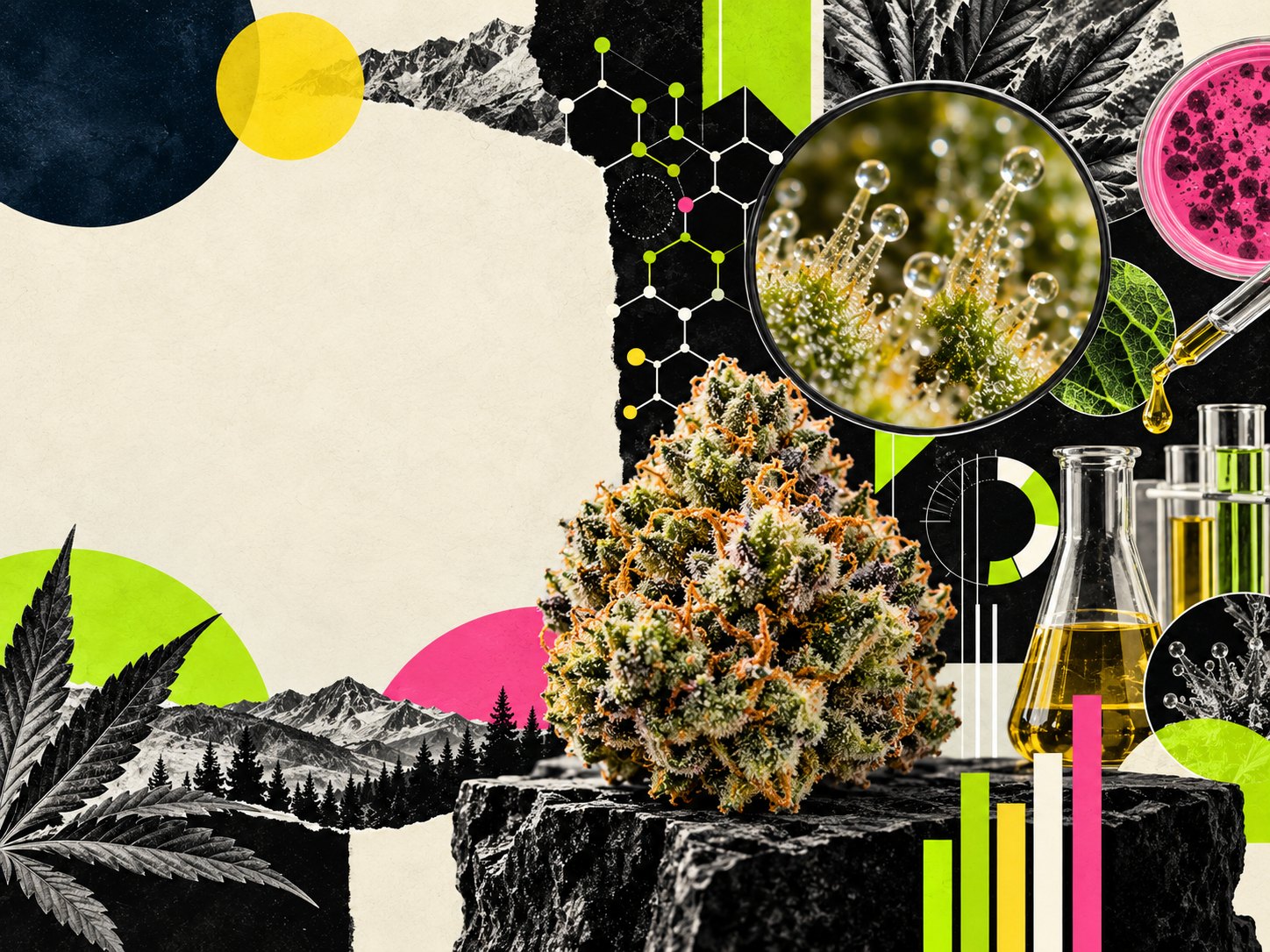
A cannabis label is one of the few places where marketing has to make room for standardized information. That makes it useful—as long as you understand what each number actually means.
Flower and pre-rolls: percentages
In Washington, inhalable products such as flower and pre-rolls list cannabinoid content as percentages. The Washington State Liquor and Cannabis Board notes that most flower products fall roughly in the 12% to 25% THC range, though products can be lower or higher. Concentrates are typically far higher.
The percentage is useful information about the tested sample. It is not a universal quality score. A higher number does not automatically mean better flower, a better experience, or a product you will personally prefer.
Edibles: milligrams matter
Edibles are labeled differently. Washington limits a serving or unit to no more than 10 milligrams of THC and a package to no more than 100 milligrams. That makes the serving information especially important because a package may contain multiple servings.
Delayed onset is one reason edible labels deserve attention. The CDC notes that edible effects may take 30 minutes to two hours to appear and can last longer than expected. Taking more because “nothing is happening yet” is a predictable way to overshoot.
Especially with edibles, the number of pieces in the container is not necessarily the same thing as the number of intended servings.
CBD and other cannabinoids
Washington requires total THC and CBD to appear on the primary display label. Some products also provide additional cannabinoids or terpene information. Treat those values as measurements of that product—not promises about a particular outcome.
Extraction disclosures
If solvents are used to produce an extract, Washington labeling rules require disclosure of the extraction method and relevant solvents or chemicals. That is worth knowing, particularly for concentrates and infused products.
What a label cannot tell you
No package can account for your tolerance, other substances you have used, medications, prior experiences, environment, or individual sensitivity. Labels are data. They are not destiny.
A good habit is to use the label as a factual baseline and ignore anyone who turns a single number into a guaranteed emotional forecast.