Cannabis culture has spent decades fighting exaggerated scare stories. That history can make honest safety conversations feel politically loaded. They should not be.
Adults can support legalization, enjoy cannabis, and still admit that impairment is impairment, children should not be able to access intoxicants, and edible timing can catch experienced people off guard.
Storage: make accidental access difficult
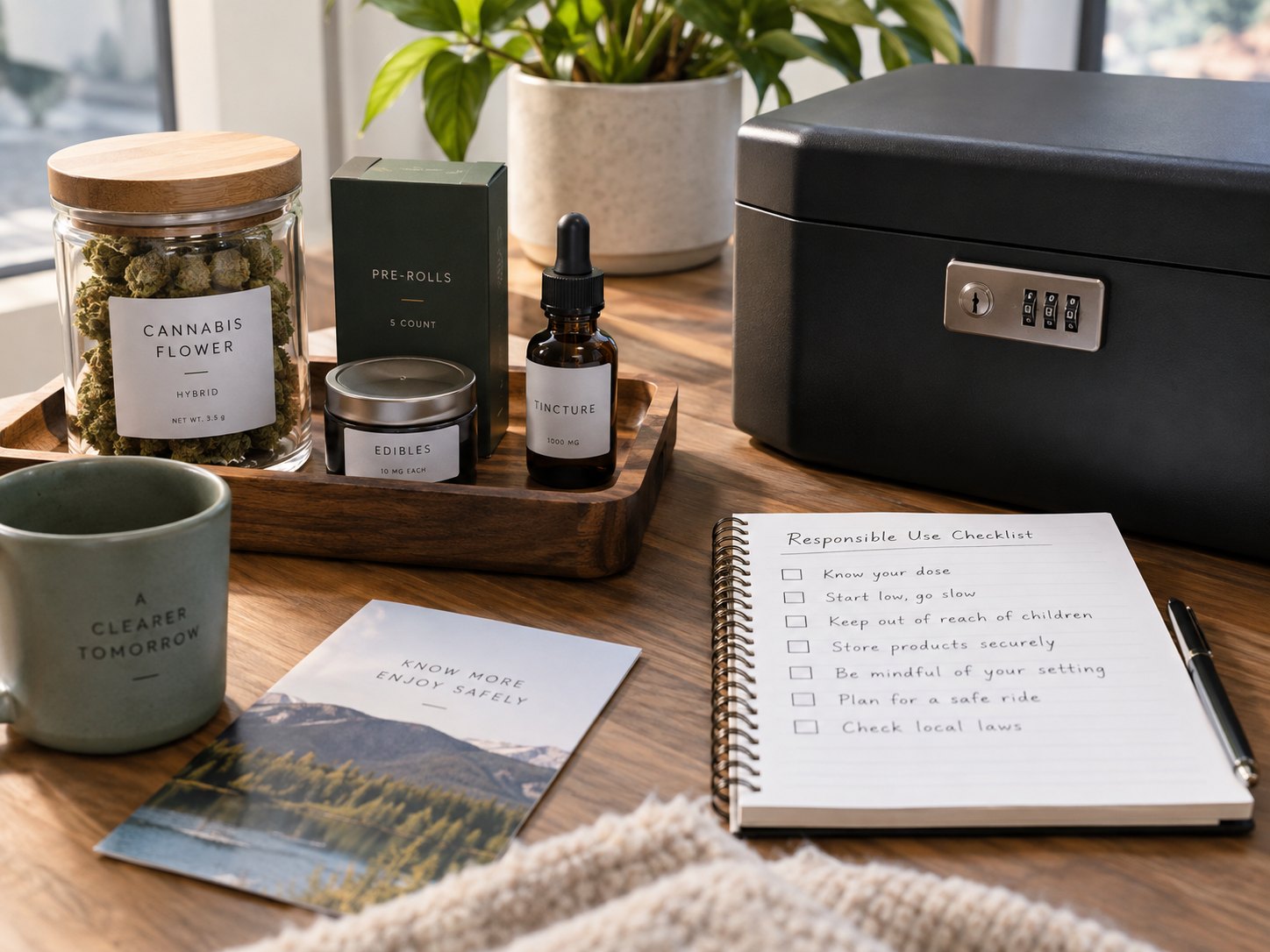
The CDC recommends keeping cannabis products in a locked, childproof container and out of the sight and reach of children and pets. That advice is especially important for edibles that may resemble ordinary food or candy.
Keep products in their original labeled packages inside secure storage. Check the area after use: no loose edibles, open containers or packages left beside ordinary snacks. Put everything away before visitors arrive.
A discreet bag or high shelf alone does not establish child-resistant storage. Check the actual container and access arrangement.
Edibles: delayed does not mean absent
The CDC notes that edibles can take from 30 minutes to two hours to produce intoxicating effects and may last longer than expected. That delay matters because it creates a temptation to take more before the first serving has fully taken effect.
Read the serving information. Give the product time. Do not assume your experience with inhaled cannabis predicts how an edible will behave.
Driving: do not turn chemistry into a loophole
Cannabis can slow reaction time, affect decision-making, impair coordination, and distort perception. The exact relationship between a measured THC concentration and impairment in a particular individual is complicated; that uncertainty is not an argument for driving after use.
If you plan to drive, the safest choice is not to use cannabis or alcohol beforehand. If you have used, arrange another way home.
Mixing substances
Using cannabis and alcohol together can increase impairment. Again, this is not moral theater. It is ordinary risk management.
Why this section exists
Because “responsible use” should be more than fine print. Safety information can be direct, useful, adult, and free of propaganda in either direction.